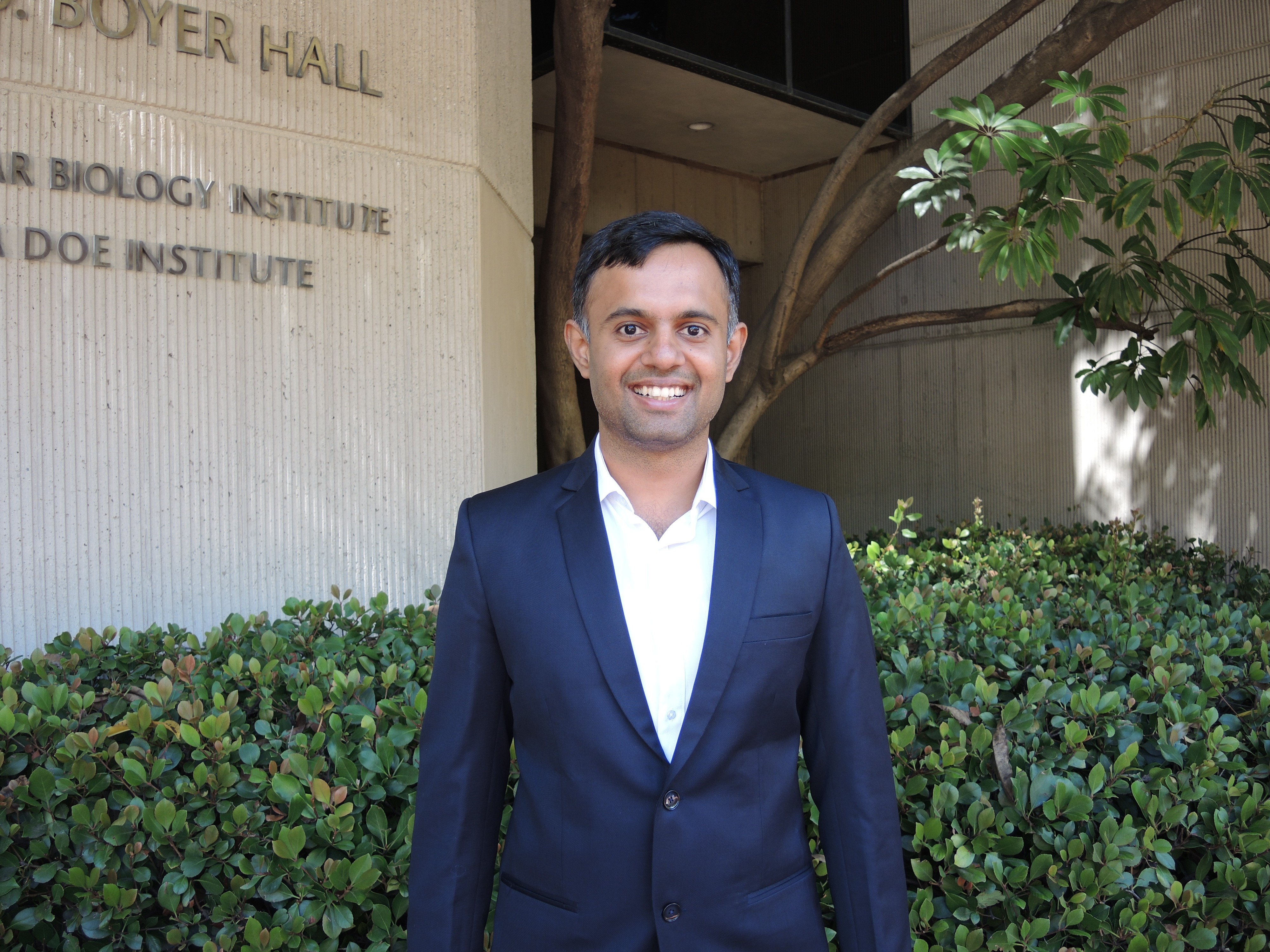
Postdoctoral Associate · UCLA — Integrative Biology & Physiology

Sai Bavisetty

Mathematical Biology · Network Science · Manifold Learning

I am a mathematician and data scientist working at the intersection of topology, network science, and systems biology. As a postdoc at UCLA's Deeds Lab in the Department of Integrative Biology and Physiology, I use topology and geometry to address fundamental questions such as how phenotypes maintain stability, and how disease networks evolve and function. Previously, I was a postdoctoral researcher at the Laboratory for Systems Medicine at the University of Florida (2024–25). I completed my PhD in Mathematics at UIUC under Vesna Stojanoska.

Upcoming Talk  ·  April 23, 2026
Balancing Stability and Complexity in Boolean Models of Biological Systems
Math Biology Seminar · UC San Diego
Mathematical Biology Topology Boolean Networks Manifold Learning Gene Regulatory Networks Neuroscience AI / ML
Sai Bavisetty
01

Research

Boolean Network Dynamics

Modeling gene regulatory networks as discrete dynamical systems to understand phenotypic robustness and network stability.

+

This project examines the stability of attractors in Boolean network models of gene regulation. We investigate how canalization and network architecture shape the robustness of phenotypes under perturbation, and work toward deriving theoretical bounds that characterize the limits of attractor stability.

Collaborators: Matthew Wheeler  ·  Claus Kadelka (Iowa State University)  ·  Reinhard Laubenbacher (University of Florida)
Manifold Learning & TDA

Applying topological data analysis and manifold learning to uncover low-dimensional geometric structure in high-dimensional biological datasets.

+

This project applies topological data analysis and manifold learning to fit manifold to high dimensional datasets. We are particularly interested in characterizing the topology of gene expression and neurological data to uncover hidden patterns and relationships that conventional analysis methods may overlook.

Collaborators: Giri Kalamangalam (University of Florida)  ·  Eric Deeds (UCLA)
Network Science & Neuroscience

Using network-theoretic and topological tools to study modularity, resilience, and reorganization in disease networks, including epilepsy.

+

This project investigates how disease networks evolve over time, with a particular focus on identifying structural configurations that are more susceptible to seizure states. We aim to determine which network modifications can most effectively eliminate seizures while preserving essential brain function. Our current work centers on patients undergoing pre-surgical evaluation for epilepsy surgery, where we analyze the topological and network properties of their intracranial EEG data.

Collaborators: Giri Kalamangalam (University of Florida)
Modularity in Biological Systems

An interdisciplinary working group exploring the definition, detection, and functional consequences of modularity across biological networks.

+

The hypothesis that biological systems are "modular" is widely accepted in systems biology, yet no consensus exists on the right definition of a module — whether it should be a structural or dynamic property, or both — nor on the concrete benefits modularity confers on an organism. This interdisciplinary working group approaches the subject from both biological and computational directions.

Working group  ·  Laboratory for Systems Medicine, University of Florida
Publications
2025
V. S. N. Bavisetty, M. Wheeler, R. Laubenbacher, C. Kadelka  ·  Physical Review E 112, 044310
Highlighted in Physical Review
2025
V. S. N. Bavisetty, M. Wheeler, C. Kadelka  ·  In review at PRX Life
In Review
2024
V. S. N. Bavisetty  ·  PhD Thesis, University of Illinois Urbana-Champaign
02

Teaching

My teaching philosophy is that active student engagement is indispensable for learning. I capture students' attention by telling mathematical stories, intentionally applying active learning techniques, encouraging self-directed learning, and striving to foster an inclusive environment where everyone can succeed. A version of my full teaching statement is available here.

At UCLA, as part of the QCBio Collaboratory, I teach short courses and workshops on programming, data science, and computational biology topics. These workshops are designed to be accessible to students with no prior coding experience, while still providing depth and practical skills for those with some background. In the Winter 2026 I taught a three-day workshop titled Introduction to Python. The workshop covers Python fundamentals, data structures and control flow, and concludes with hands-on exploratory analysis of single-cell RNA sequencing data.

Upcoming

Upcoming Workshop - April 2026
Introduction to Image Processing
QCBio Collaboratory · UCLA

This workshop is intended for researchers with some programming experience who want to learn how to apply image processing techniques to biological data. We will conver both classical imaging processing techniques and modern deep learning-based methods, with a focus on practical applications in microscopy and biomedical imaging.

QCBio Collaboratory ↗

Course Materials

Introduction to Python +

QCBio Collaboratory, UCLA · Winter 2026. A three-day workshop covering Python fundamentals, data structures and control flow, concluding with hands-on exploratory analysis of single-cell RNA sequencing data.

Topological Invariants — SIM Camp +

Summer in Illinois Math Camp (SIM Camp), UIUC · Summer 2022. A week-long course designed and taught for high school students interested in pure mathematics, introducing topological invariants and their applications.

03

Talks & Seminars

Invited Talks & Seminars

Balancing Stability and Complexity in Boolean Models of Biological Systems Math biology seminar, UCSD · Apr 2026
Network reorganization during ASM cycling EBD Data Blitz, UCLA · Feb 2026
Balancing Stability and Complexity in Boolean Models of Biological Systems Cal Poly Colloquium · Oct 2025
Balancing Stability and Complexity in Boolean Models of Biological Systems Microscopy & Modeling Seminar, UCLA · Oct 2025

Expository Writing

Invertible Objects in Homotopy Theory Notes from Vesna Stojanoska's talk at Viva Talbot, with Saad Slaoui
Milnor's Paper on Exotic Spheres: A Survey A proof that exotic spheres in dimension 4k (k > 1) are finite
Non-Uniform ACC Bounds: A Survey A synopsis of Williams' seminal paper on nonuniform ACC circuit lower bounds
04

Conferences

Minisymposium Organizer
Bridging Structure and Dynamics in Biological Networks
SMB · 2026
+

Understanding how the structure of a network constrains and drives its dynamics is a central challenge in complex biological systems. While network topology is known to influence phenomena such as multistability, robustness, synchronization, and spreading behavior, the precise mechanisms linking structure to dynamics remain only partially understood. Many real world networks display hallmark properties of complex systems such as feedback loops, modularity, and nonlinear interactions that make it difficult to predict dynamical outcomes from connectivity alone. This minisymposium showcases recent advances aimed at closing this gap. The talks highlight new mathematical and computational approaches that reveal how patterns of interaction shape collective behavior in biological, social, and engineered networks. By integrating theoretical insights with application driven examples, the session seeks to illuminate unifying principles that govern the structure–dynamics relationship and to inspire future work in this rapidly developing area.

Annual SMB meeting ↗
Modularity in Biological Systems Workshop
National Institute for Theory and Mathematics in Biology (NITMB)
+

The hypothesis that biological systems exhibit a modular structure is widely accepted. Beyond being a “fundamental law of biology,” it has the potential for important applications, for instance in biomedicine and synthetic biology. It could also serve as an organizational principle for the analysis of high-dimensional complex -omics datasets. However, there is currently no widely accepted definition of what comprises a biological “module”. There is also a lack of foundational research on modularity at both the theoretical and applied level. To address this problem, the proposed workshop will bring together an interdisciplinary group of researchers from biology, modeling, mathematics, and fields outside of biology that currently use the modularity concept, such as engineering and computer science.

Workshop Website ↗
05

Mentoring

I welcome inquiries from students interested in mathematical biology, topology, or network science. Backgrounds in mathematics, physics, or CS are all suitable entry points — feel free to reach out with a brief description of your interests.

Undergraduate Projects

I have mentored undergraduate/high school research projects through Illinois Geometry Lab and Orlando Math Circle, guiding students through original mathematical research.

Impact of network structure on phenotypes of Gene Regulatory Networks +

Orlando Math Circle · 2024–26. In this project, we look at Affine Boolean Networks, a class of Boolean networks that can be represented as affine linear maps over the field F_2. We investigate how the topology of the networks informs the dynamics of the system.

Impact of Russia-Ukraine war on critical infrastructure +

Illinois Geometry Lab, UIUC · Summer 2023. This project investigates how the Russian Invasion of Ukraine is manifested in Open Street Map. The project centers around data and visualization of changes to Open Street Map in various engagements.

Modular Forms and homotopy of Q(2) +

Illinois Geometry Lab, UIUC · 2021–22. The project investigates the relationship between modular forms and the homotopy groups of the spectrum Q(2) at the prime 3.

Mentored Students

Students I have mentored who have gone on to strong programs in mathematics and computational biology.

Matthew Jones Undergraduate · MIT
Julian Vignes Undergraduate · University of Pennsylvania
Garrett Credi Graduate student · University of Minnesota
Dimitrios Tambakos Graduate student · Purdue University
Casey Appleton Graduate student · UC Berkeley
Rishi Narayanan Graduate student · University of Albany
Elias Sheumaker
07

Resources

GitHub LinkedIn Scholar ORCID PyPI
Complexity Theory
01Science and Complexity
Warren Weaver
+
A must read paper on Science and Complex systems theory. It describes that there are three kinds of problems in science: problems of simplicity, disorganized complexity, and organized complexity. The first type involves a few objects interacting via Newtonian laws. The second is where there are a large number of interacting objects but they are completely disorganized. Therefore even though an individual object is hard to analyze, the collection as a whole becomes amenable to statistics. The third is the domain of complex systems theory where there are a large number of objects but there is also some organization and is still poorly understood. The paper also gives a nice historical overview of the development of complex systems theory and its relationship to other fields such as physics, biology, and economics.
02The Architecture of Complexity
Herbert Simon
+
This paper introduces complexity as a defining feature of many systems and grapples with the challenges of understanding and modeling them. It argues that complex systems arise from large numbers of interacting components, giving rise to emergent behaviors that cannot easily be predicted from the parts alone. The paper also highlights how modularity and hierarchy serve as organizing principles that help tame complexity and make such systems more tractable to study.
03Origins of Order: Self-Organization and Selection in Evolution
Stuart Kauffman
+
This book delves into self-organization and selection in evolution, and in many ways feels like a natural continuation of Kauffman's work on Boolean networks. It makes the case that the stability of biological systems emerges from the structure of gene interaction networks alone, independent of natural selection. The book also puts forward the compelling idea that life exists at the edge of order and chaos — stable enough to preserve its structure, yet flexible enough to adapt and evolve.
Boolean Networks
01Metabolic Stability and Epigenesis in Randomly Constructed Genetic Nets
Stuart Kauffman
+
A must-read paper and the foundational work on Boolean networks in biology. T Kauffman chose this model to explore whether the stability of biological networks arises as an emergent property, or whether it is instead shaped by natural selection.
02 The Dynamics of Conjunctive and Disjunctive Boolean Network Models
Jarrah et al.
+
A beautiful paper showing how the modular structure of a conjunctive network determines its number of steady states. It extends an earlier result giving a complete attractor description for Boolean networks with a single module [1]. Interestingly, if NOT gates are introduced, the number of steady states collapses to 1 regardless of the module topology or poset structure.
Further Reading
[1] Boolean Monomial Dynamical Systems Colón-Reyes, Laubenbacher & Pareigis · Annals of Combinatorics, 2004
Modularity of Biological Systems: A Link between Structure and Function Wheeler et al.
Developmental Biology
01The Strategy of the Genes
C. H. Waddington
+
This is the paper featuring the iconic Waddington landscape. Waddington uses the epigenetic landscape as a metaphor to explain cellular differentiation and development. It also introduces the concept of canalization — the idea that development is robust to perturbations, with the system organized to buffer against disruptions and reliably produce the same outcome. One thing I particularly appreciate is the care Waddington puts into his terminology. He coins names like "chreods" for the developmental pathways and "canals" for the valleys, and devotes considerable thought to justifying these choices over alternatives.
08

Curriculum Vitae

Education
Ph.D. in Mathematics
University of Illinois Urbana-Champaign (UIUC) · May 2024 · GPA 3.92/4.0
M.S. in Mathematics
Indian Institute of Technology Bombay (IITB) · Aug 2017 · GPA 9.59/10.0
Positions
Postdoctoral Associate — UCLA
Department of Integrative Biology & Physiology · Aug 2025 – Present
Postdoctoral Associate — University of Florida
June 2024 – July 2025
Research Affiliate — Lawrence Berkeley National Lab
Summer 2022 · Topological Data Analysis & Generative Neural Networks
Research Visits
Spectral Methods in Algebra, Geometry & Topology
Hausdorff Research Institute for Mathematics, Bonn · Fall 2022
Selected Awards
Susan C. Morisato Scholarship — Leadership in undergraduate projects, Illinois Geometry Lab
Wolfgang Haken Prize — Outstanding thesis in Geometry and Topology
Collaboratory Fellow Award — Postdoctoral research in computational biology & bioinformatics
Landahl Travel Grant — Society for Mathematical Biology annual meeting
NITMB Travel Grant — MathBio Convergence & Modularity in Biological Systems workshops
Invited Talks
Network reorganization during ASM cycling
EBD Data Blitz, UCLA · Feb 2026
Balancing Stability and Complexity in Boolean Models of Biological Systems
Cal Poly Colloquium, San Luis Obispo · Oct 2025
Balancing Stability and Complexity in Boolean Models
Microscopy & Modeling Seminar, UCLA · Oct 2025
Upper bound for robustness of a Boolean Network
Department Seminar, University of Florida · April 2025
Service
Co-organizer, FLAME (Future Leaders Advancing in Math & Medicine)
April 2025
Member, Graduate Affairs Committee
UIUC · Fall 2022
Co-organizer, Math Dept TA Training
UIUC · Fall 2022
Download Full CV (PDF)  ↓